ADA Certified Accessible Portable Toilets: What Rental Clients Need To Know
If you are leasing mobile toilets for an event, public gathering, neighborhood program, or momentary website available to participants beyond a private staff, accessibility is not a side detail. It is part of whether people can participate with dignity, self-reliance, and fundamental comfort. That appears obvious when mentioned plainly, yet portable sanitation is just one of those locations where individuals frequently focus initially on unit counts, shipment windows, and pump-out schedules, after that realize later that they have actually not thought meticulously sufficient concerning access.
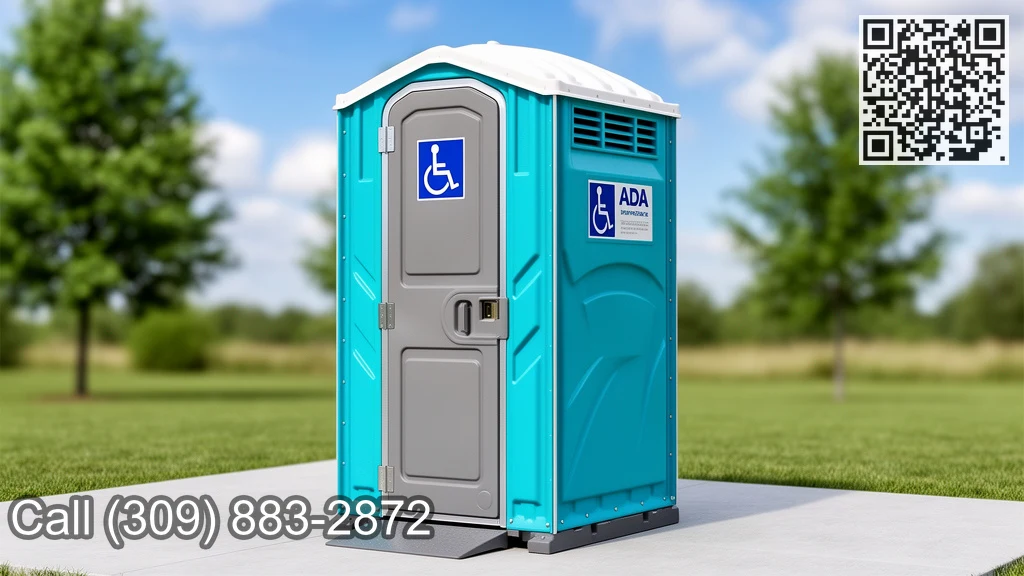
I have seen this occur in planning discussions greater than once. A client will certainly ask for "one handicap device" as if that expression alone works out the matter. It does not. An ada accessible portable bathroom is not simply a larger box went down somewhere near the common units. The placement matters. The path issues. The entry issues. The internal format issues. Also the means the device is marked matters.
That is why rental customers ought to understand the essentials prior to the truck arrives.
The primary rule customers require to know
For clusters of mobile single-user bathroom systems, at the very least 5 percent of the systems in each collection must be accessible. That typical applies also at temporary occasions. For lots of clients, that is the solitary crucial starting point, because it changes exactly how you count units and just how you prepare the restroom area.
This point gets missed remarkably commonly. Somebody may assume that due to the fact that an occasion is brief, outside, or short-term, the access need is in some way kicked back. It is not, based upon the regulating federal availability requirements and exactly how they are analyzed for temporary mobile toilet setups. If you have a cluster of mobile single-user devices, you need easily accessible units because cluster at the required ratio.
That suggests the conversation should begin with the collection count, not with an obscure ask for "an ADA unit if we have space." If you are renting ten portable restrooms with each other in one financial institution, your preparation must already represent the required obtainable existence within that collection. If you are developing separate restroom groups in various locations of a website, each cluster needs to be taken into consideration on its own.
That last part matters more than consumers anticipate. I have seen layouts where organizers put basic units near the primary task location and put the easily accessible portable bathroom somewhere else due to the fact that there was "more area there." From a functional perspective, that typically creates stress for customers. From a conformity viewpoint, it additionally misses out on the logic of the rule, which considers each cluster.
"ADA compliant" means greater than additional flooring space
A lot of rental buyers make use of terms like ada mobile washroom, ada mobile toilet, ada compliant mobile bathroom, and ada-compliant mobile bathroom mutually. In everyday conversation, that is reasonable. In technique, though, what you are trying to find is an unit and arrangement that fulfill the appropriate access needs, not simply a roomier model.
The government criteria compare a system that is marketed delicately as accessible and one that really satisfies the suitable layout and layout needs. Mobile accessible units have to meet toilet-room technological demands, including clearances for maneuvering, turning room, and door maneuvering, together with appropriate policies for grab bars and water-closet clearances. The entryway and route likewise need to come, and if ramps or touchdowns are needed, those need to comply with ADA technological needs too.
That is why knowledgeable coordinators ask far better inquiries than "Is it the big one?" Size alone does not respond to whether the unit works for genuine customers or whether the installment is compliant once it is on site. A huge system placed in mud at the end of a rutted path is not operating as an obtainable solution. Neither is an effectively developed device whose entryway is blocked by quality modifications, soft ground, or inadequate positioning.
This is just one of the most vital frame of mind changes for clients. Availability has to do with usability in the real problems people experience on the day of the occasion or rental period.
The route to the restroom belongs to the restroom
This is where numerous otherwise careful plans begin to damage down.
Customers will certainly hang around discussing the number of systems and nearly none discussing exactly how someone reaches them. Yet the accessible path becomes part of the requirement. If an ada certified accessible portable toilet is supplied to a sloped spot of turf, established behind a curb, or placed where a person has to go across loose crushed rock or deep mud, the problem is not just inconvenient. The setup might fall short the availability demand because access is not just about the indoor compartment.
Think regarding the bathroom journey from a user's point of view. They reach the site, move toward the assigned toilet location, approach the entrance, open the door, maneuver inside, utilize the fixture, and leave securely. Every part of that series issues. If any step comes to be challenging or difficult as a result of the path, the setup is not doing what it is supposed to do.
This is specifically appropriate at festivals, fairs, races, pop-up venues, and short-term community events where the premises may be unequal or adjustment with weather condition. A site that looked workable during a bright walkthrough can come to be much more challenging after rain. I have actually seen occasion areas turn from "strong sufficient" to deeply rutted by supplier web traffic in a single afternoon. When that takes place, the easily accessible course ends up being the first thing to fail.
Customers do not need to become code professionals to prepare well. They do need to identify that an ada portable bathroom service involves more than picking a device from a catalog. Site conditions are part of the decision.
Identification is not optional
Accessible portable toilet systems must be understood the International Sign of Accessibility. This might look like a minor detail compared to route gain access to or interior handling area, but it has real worth. People need to be able to find the appropriate system rapidly and confidently. Clear recognition minimizes complication for individuals and personnel alike.
It additionally protects against an all-too-common trouble at hectic occasions, where participants stroll past an easily accessible system because it does not stick out clearly, after that think none is offered. Good recognition sustains real use, and real usage is https://cruzpoht593.talesignal.com/posts/ada-compliant-portable-toilets-for-events-a-clear-guide-to-ease-of-access-rules the whole point.
If you are the customer, do not presume this will certainly be managed automatically without discussion. Verify exactly how the system will be identified and ensure the easily accessible unit is not concealed behind barriers, storage space, or crowd-control fencing.
One special exemption consumers often hear about
There is a narrow context that causes complication: portable commode devices at building and construction sites made use of exclusively by building employees have actually been treated differently under the older cited 1991 criterion. Some individuals hear that and erroneously end that mobile bathroom access guidelines are generally looser on work websites or short-term locations.
That is not a risk-free general assumption.
For basic portable toilet leasings, the accessible-unit need continues to be appropriate. If your setup serves the public, event visitors, consumers, or others past that particular exempted construction-personnel context, you must not rely upon that exemption. It is one of those details that gets duplicated delicately and misconstrued quickly. Rental consumers are far better off dealing with access as an anticipated planning demand unless they have an extremely certain factor, based in the actual regulation context, to think otherwise.
Why "momentary" does not suggest "less important"
There is a routine in event preparation and temporary-site logistics of dealing with temporary setups as somehow casual. If it is only there for a day or a weekend, people think perfection is impractical. Realistically, not every event site is easy. Area are unequal. Shipment paths are tight. Utility conflicts show up late. Schedules slip. Yet none of that transforms the significance of providing access.
For the person that needs the ada handicap easily accessible mobile restroom, the rental is not a formality. It is whether they can stay at the occasion without leaving early. Whether they can participate in a college graduation, support a member of the family at a competition, work a booth via a long shift, or just prevent the embarrassment of having no functional option.
That is why compassion belongs in this discussion together with conformity. The criteria issue because they safeguard real participation.
Questions worth asking prior to you sign the rental order
A short, sensible conversation in advance can avoid the most usual problems. You do not need a lawful memorandum. You require clarity on the system, the collection, and the website conditions.
- How several mobile single-user systems will be in each cluster, and the number of of those will certainly be accessible?
- Where precisely will the available system be placed relative to the toilets individuals are anticipated to use?
- What is the path to the unit like on the actual ground, not simply on the site map?
- Will the easily accessible unit be plainly understood the International Sign of Accessibility?
- If ramps or landings are needed, that is in charge of ensuring they comply with the applicable technological requirements?
Those 5 inquiries are straightforward, however they force the ideal conversation. They additionally reveal promptly whether a vendor or site organizer is thinking in functional terms or simply inspecting a box.
Placement mistakes that trigger migraines later
The most regular trouble I see is not a lack of excellent intents. It is last-minute decision making.
A coordinator might book ada compliant portable bathrooms early, then let one more website change press the systems right into an even worse place. Occasionally a food vehicle line increases. In some cases a momentary fencing shifts. In some cases the toilet financial institution ends up beside a slope since the flatter location obtained asserted by staging devices. None of those adjustments really feel significant when they take place one at a time. With each other, they can undermine accessibility.
Another error is separating the accessible system to "give it even more area." On paper that seems considerate. In method it can suggest the accessible device is far from the primary restroom location, improperly lit, more challenging to discover, or obtainable only through a various course that is much less stable.
There is additionally the weather problem. Dry turf is not the same as rain-soaked grass. An occasion supervisor may depend on a field in setup shoes 2 days before opening up and believe, this is great. Then shipment automobiles, supplier website traffic, and a little water change the entire surface. If your event relies on exterior placement, it is worth thinking through what takes place if problems worsen.
Good planning generally looks less dramatic than poor planning. It is choosing the flatter path. Maintaining the strategy clear. Safeguarding the course from advancement. Confirming the positioning after various other vendors are assigned. None of that is glamorous, but it is what makes an ada compliant mobile commode usable.
Accessibility and consumer trust fund go together
People notice when accommodations are thoughtful, and they discover when they are token gestures.
If your visitors or attendees consist of older grownups, handicapped attendees, caregivers, professionals, or anyone utilizing mobility tools, they are currently scanning a site differently than others are. They are discovering range, grade, crowd density, and whether the easily accessible restroom shows up to have been planned purposefully or tacked on at the end.
That impacts trust fund. When the washroom arrangement really feels easily accessible in an authentic method, people tend to presume the rest of the event has actually been intended with the very same treatment. When the obtainable unit is stuck in an obviously uncomfortable place, the message is tough to miss.
This is one factor experienced organizers increasingly treat accessibility as part of the general guest experience instead of a narrow compliance job. The legal framework matters, but so does the human signal it sends.
The broader conformity climate is getting extra serious
Across numerous industries, ADA conformity is being enforced within a broader environment of accessibility expectations. That does not indicate every washroom rental customer requires to end up being a professional in every ease of access rule throughout the economy. It does imply availability is not fading right into the background. If anything, organizations are seeing that access responsibilities are energetic, noticeable, and progressively scrutinized.
That larger context must encourage rental customers to stay clear of shortcuts. When a firm, district, school, church, or event organizer takes care with something as basic as portable cleanliness gain access to, it is typically an indication of much healthier conformity habits overall.
What to expect from an excellent rental conversation
A qualified portable bathroom provider must be able to review easily accessible options in plain language. They ought to recognize that consumers may request ada-compliant portable bathrooms, ada compliant mobile restrooms, or an ada mobile bathroom service, which all of those terms aim toward the very same useful need: a system and setup that please relevant access requirements.
The greatest providers normally do 3 things well. They do not reduce the site problems. They do not treat recognition as minor. And they recognize that placement within the toilet collection matters.
Customers additionally have responsibilities. If you transform the site strategy after shipment, block the course with obstacles or materials, or move individuals via surface that endangers gain access to, the issue is not addressed just because an obtainable unit was originally supplied. Access can be broken by bad occasion operations also when the ideal unit was ordered.
That is worth saying plainly since rental customers often presume conformity is entirely the supplier's worry. It is not that straightforward when the consumer manages the website format, web traffic flow, and last use conditions.
When one unit is not enough
The 5 percent policy is the baseline for collections of portable single-user commodes, however clients ought to not think just in terms of minimums divorced from fact. A minimum demand is specifically that, a minimum. Relying on the dimension and nature of the occasion, need patterns might make a bare-minimum method really feel stretched also if the count practically covers the base scoping requirement.
I would take care here, though, because good judgment depends on context. Group dimension, occasion duration, demographics, and site spread out all matter, and not every circumstance warrants surpassing the minimum matter in the same way. Still, if you anticipate hefty participation or several toilet clusters across a wide website, it is smart to analyze actual customer circulation, not just the limit question of whether an obtainable system exists somewhere.
This is where useful preparation issues as long as formal scoping. An easily accessible device that is constantly inhabited due to the fact that the total setup was as well lean can produce preventable aggravation. Consumers that have actually organized repetitive annual events generally learn this quickly.
A last planning lens that helps
When deciding whether your setup is likely on the right track, it assists to imagine one visitor showing up alone and using the toilet without aid. Could they locate the available unit easily? Could they reach it utilizing the intended course? Could they go into, maneuver, and exit without unnecessary obstacles? Would certainly the configuration still work if the ground problems ended up being slightly even worse than expected?
If the answer to any of those concerns feels shaky, the strategy probably requires another look.
An ada certified available mobile toilet need to not be dealt with as an unique favor for a small group. It is a typical part of making a short-lived website benefit the public. The clients who handle it ideal are rarely the ones with the most significant budget plans. They are the ones that ask better questions early, verify the details, and consider the experience from the individual's point of view.
That technique serves compliance, certainly. Much more notably, it offers people.
 Ask ChatGPT
 Ask Grok
 Ask Perplexity
 Ask Claude
 Ask Google AI
 Ask You